
Commerce makes final decision in line pipe sunset review
The Commerce Department believes notable dumping and illegal subsidies would continue if import duties on welded line pipe from Turkey and Korea were allowed to expire.


The Commerce Department believes notable dumping and illegal subsidies would continue if import duties on welded line pipe from Turkey and Korea were allowed to expire.

Steel buyers expect prices to keep rising in the near term and report steady-to-improving demand and lean inventories. Imports remain competitive despite risks.
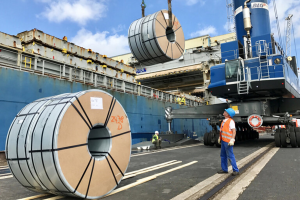
SMU’s average price for domestic hot rolled (HR) rose to $1,200 per short ton (st) week on week (w/w). In offshore markets, prices also rose, outpacing stateside gains.

New anti-dumping and countervailing duties (AD/CVDs) on rebar imports from three nations will officially take effect after a key vote.
Trade talks between the US and Canada collapsed late on Friday, just hours after media reports that an accord was near.
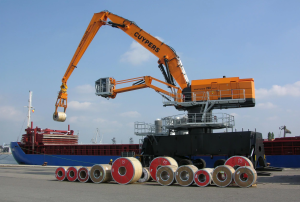
SMU’s average price for domestic hot rolled (HR) rose to $1,195 per short ton (st) week on week (w/w). In offshore markets, prices saw a more controlled rise.

The pig iron market in the US has been thrown into uncertainty. The culprit? Indian material being imported into the US at prices well under the prevailing Brazilian level.

Foreign steel remains sharply competitive, inventory levels are mostly steady, and demand is strengthening, according to SMU's Aug. 7 market survey. But buyers are more selective than earlier in the year, even as pricing momentum continues to push spot levels higher.
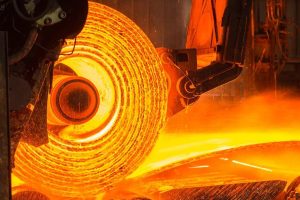
Apparent steel supply rose 3% from May to June to the highest rate recorded in over four years, according to recent Department of Commerce and American Iron and Steel Institute (AISI) figures. June’s supply increased to 9.31 million short tons, driven primarily by higher domestic shipments, and partly offset by lower finished imports and increased exports.
SMU’s average price for domestic hot rolled was unchanged week on week at $1,180 per short ton. In offshore markets, prices mainly moved up.
Earlier this week, SMU polled steel buyers on an array of topics, ranging from market prices, demand, and inventories to tariffs, imports, and evolving market events. We are sharing a selection of the comments we received below, in each buyer’s own words.
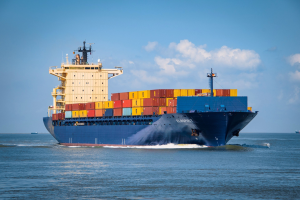
Licenses to import steel into the US surged in July to the highest level since June 2025, according to recently released US Commerce Department data. Final June figures show a 3.8% month-on-month decline, while July licenses show a 9% recovery.
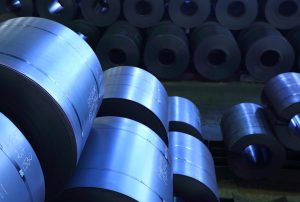
Recent conversations with some hot-rolled coil spot market participants revealed spiking stress levels amidst a tightening supply of the steel sheet product.

It’s tough to find a new angle to write about in a market that continues to be characterized by the same trends. You know the ones: extremely limited spot tons, long lead times, low inventories, and high prices.
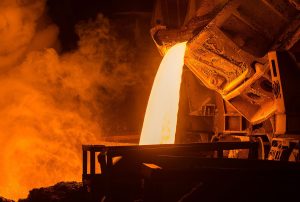
In recent conversations, some participants predict mill maintenance outages and scheduled updates will crimp an already constricted market.
SMU’s average price for domestic HR rose to $1,180 per short ton (st) this week, $15/st higher vs. the prior week. In offshore markets last week, prices mainly moved up.

Editor’s note This is an opinion column. The views in this article are those of an experienced trade attorney on issues of relevance to the steel market. They do not necessarily reflect those of SMU. We welcome you to share your thoughts as well at smu@crugroup.com. My colleague and friend Alan Price wrote last week about […]
The decisive factor remains the 50% Section 232 tariffs. Still, imports from Europe remain largely near parity with domestic material, while Southeast Asian products are at a considerable discount.

This item was first published by CRU. To learn about CRU’s global commodities research and analysis services, visit www.crugroup.com. Chinese steel export prices remained rangebound on persistently weak demand. Indian hot-rolled (HR) coil export prices fell amid elevated freight rates and European caution, while Turkish HR coil export prices came under pressure from EU quota exhaustion. […]
Earlier this week, SMU polled steel buyers on an array of topics, ranging from market prices, demand, and inventories to tariffs, imports, and evolving market events.
Hot-rolled coil market participants continue to see spot prices rise alongside the popularity of the beloved, short-spined Seattle raccoon this summer.

Speaking on the company’s second-quarter earnings call, executives described a sheet market defined by broad-based demand, disciplined pricing behavior, and a structural shift in customer buying patterns.
Foreign steel is gaining traction with US buyers, according to SMU's most recent Flat-Rolled Steel Survey. Most manufacturers and service centers now report competitive pricing, and more are placing new foreign orders.
Sources across the hot-rolled coil spot market said it was somewhat easier to find spot HR, at moderately shorter lead times, and at stable prices in recent days.
The US Department of Commerce is adjusting the import duties on Korean cold-rolled and galvanized steel after two administrative reviews.
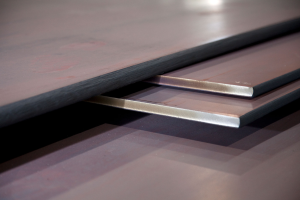
Spot market absorbs price hikes amidst booming plate demand

Apparent steel supply jumped 8% from April to May to a near four-year high, according to recent Department of Commerce and American Iron and Steel Institute (AISI) figures.
Downstream consumers of steel account for many times the employment in steel production. Yet the tariff manufacturers in the federal government have paid scant attention to the needs of most manufacturers.
SMU’s average price for domestic HR remained flat, holding firm for the past three weeks. In offshore markets last week, prices mainly moved higher.

Barry Zekelman showed up to last Wednesday’s SMU Community Chat as his usual self: energized, blunt, and unapologetically bullish on the US steel industry.